Robert Elwald; Clan Elliot Chief #1

Clan Armstrong 💪🏻 Reiver Trail 💪🏾 Google-YouTube

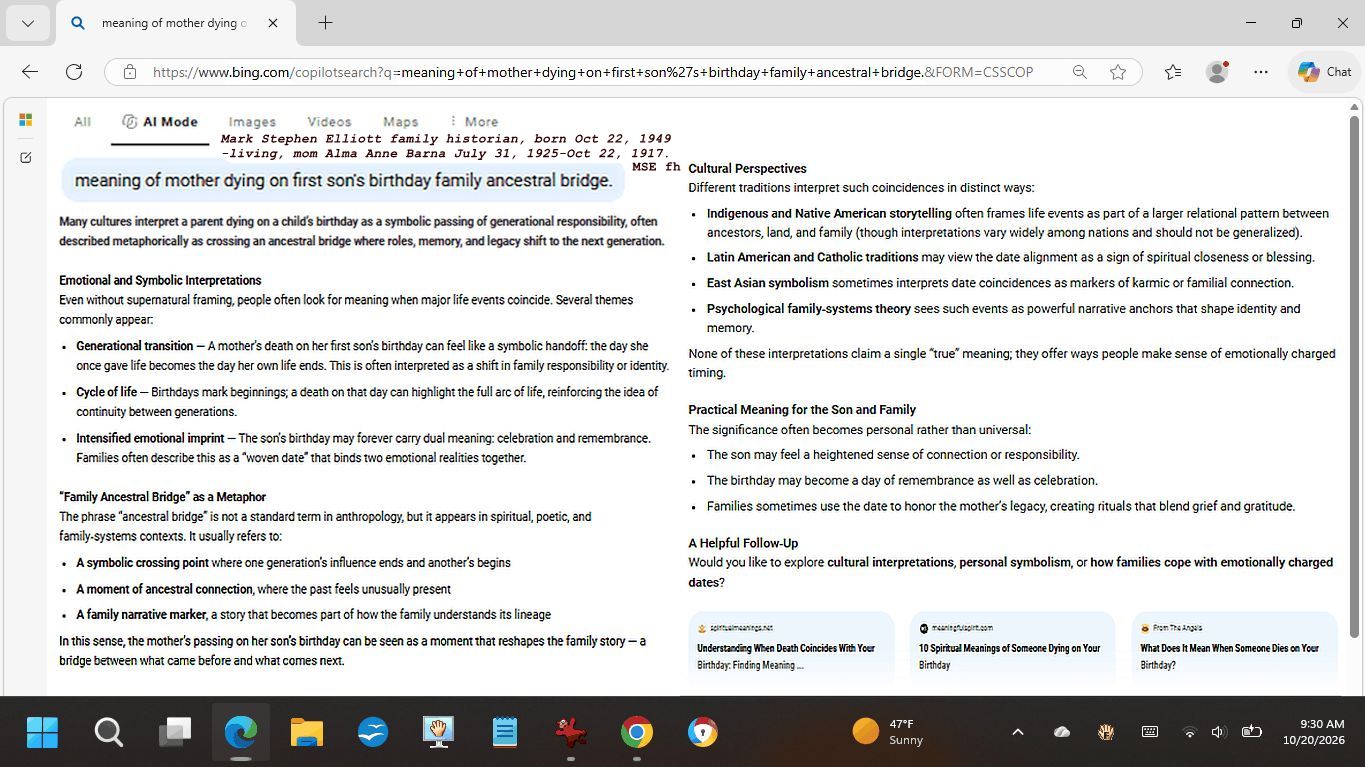


60th I enjoyed because, Alma, my mother had not died yet, Oct, 22, 1917. MSE fh.


Chronicles of the Armstrongs; : Armstrong, James Lewis MD :The Marion press 1902 : Internet Archive


Phylogeography of R-U106 Iain McDonald February 26, 2026 PDF


Using Geographic Surname Correlation Extra MSE 1/19/2013 PDF
Chasing my Y-DNA part-35 MSE 1/16/2013 PDF
Armystrand & Elwald 3/11/2015 MSE PDF


FamilyTreeDNA.com/Social-Photos/3935440


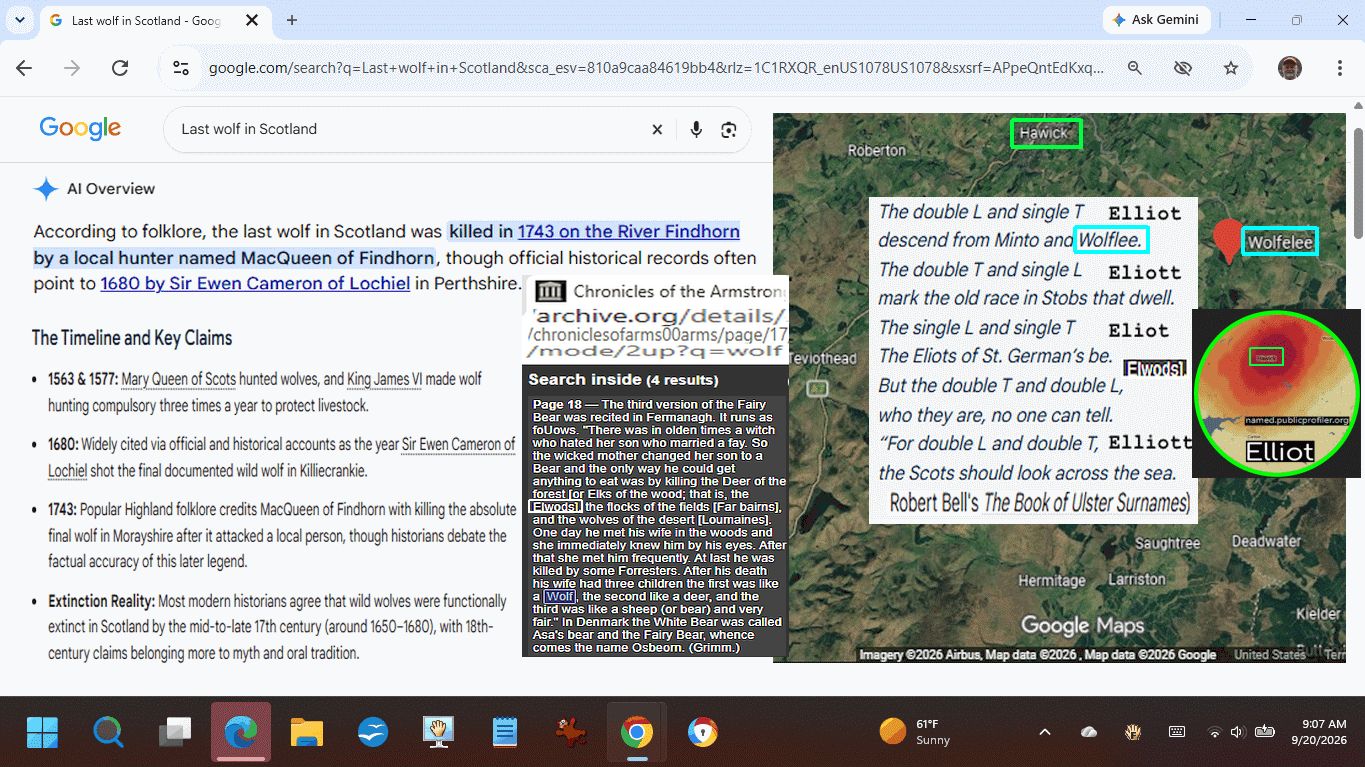
Wolf – Chronicles of the Armstrongs; : Armstrong, James Lewis MD : Internet Archive


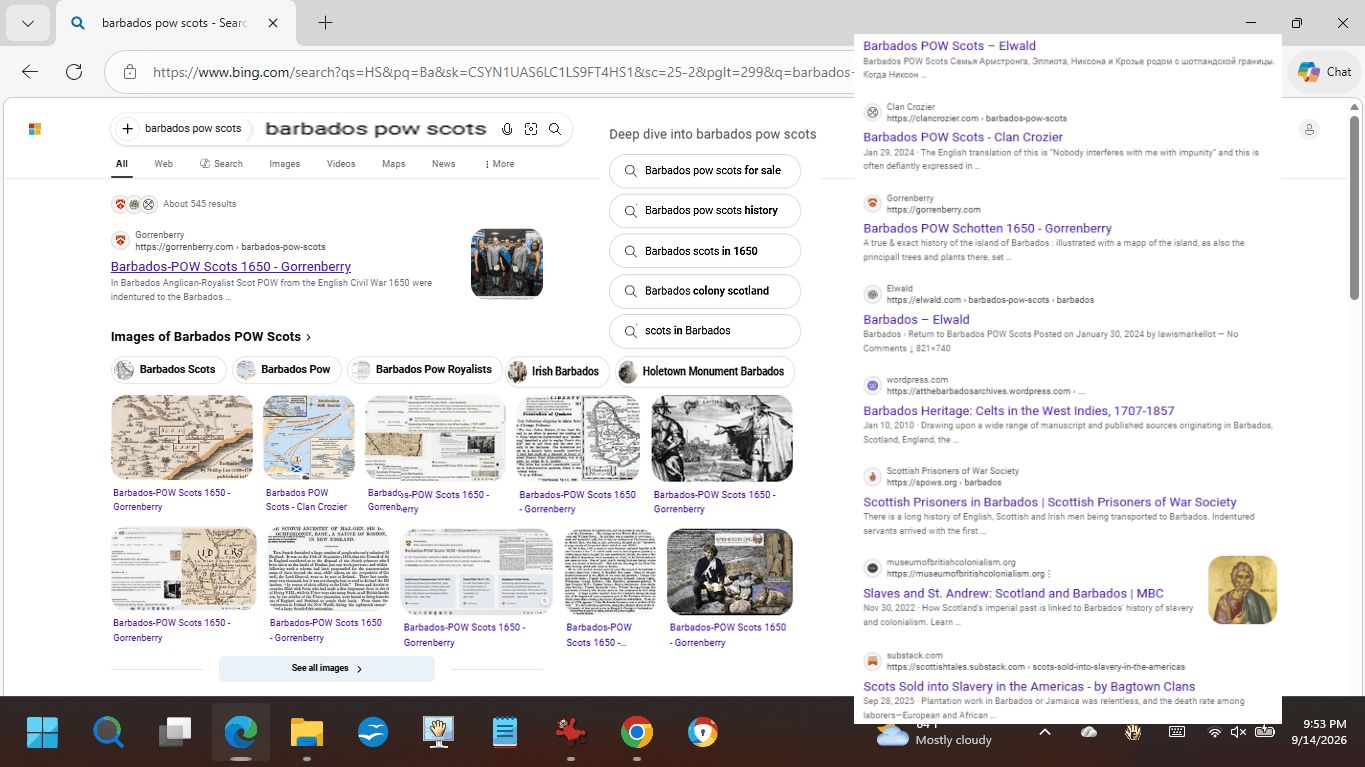


FamilyTreeDNA.com/Social-Photos/2218047
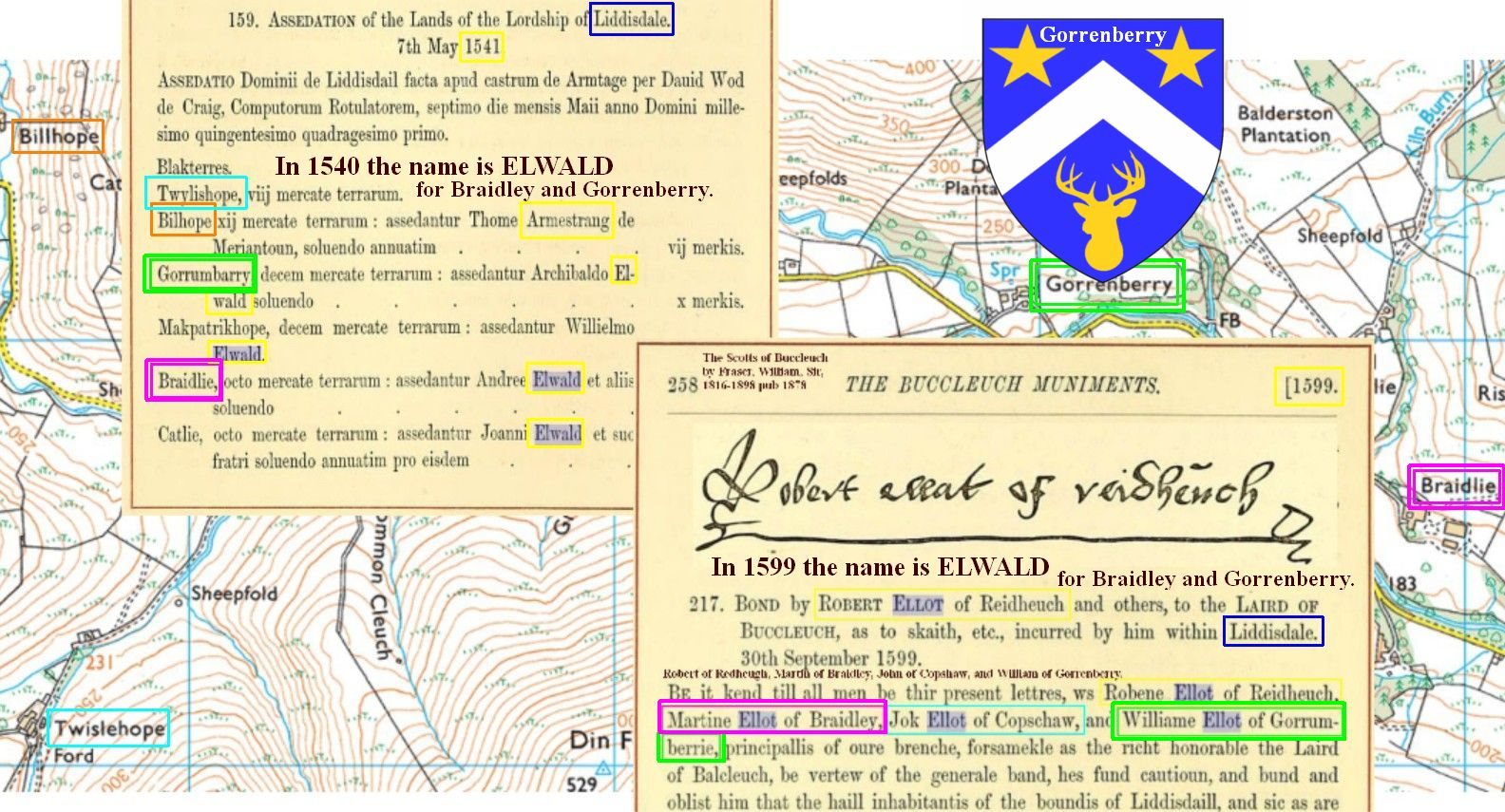

Armstrong Elwald, Mark Elliott 3/11/2015 PDF
Aliot-Elwald, Mark Elliott 7/15/2013 PDF
Lands of Horseliehill and Stobs, Relations of William of Horsliehill, Gavin of Stobs MSE 2013 PDF
Clan Crozier 1-6 Clan Crozier 7-13 MSE PDF

Gorrenberry Jubilee Wood
Background
Gorrenberry is an ecological restoration project which aims to restore much of the biodiversity of a substantial area in the Scottish Southern Uplands, while maintaining a varied pattern of economic activity at a sustainable level.
In 2011 Gorrenberry was a 935 hectare hill farm including four dwellings and two groups of steadings on the Hermitage Water, Roxburghshire, Scottish Borders (55.266827N, 2.845836W). It was purchased in March 2011 by Jane Bower and Ken Lyall. The farm is approximately 20 miles south of Hawick and is reached by the unclassified road between the A7 and the B6399 signposted to Hermitage Castle.


A Hawick Word Book🍁 Douglas Scott🍁 PDF 17AUG2026 draft


Chronicles of the Armstrongs; : Armstrong, James Lewis MD : Internet Archive.org


Chronicles of the Armstrongs; : Armstrong, James Lewis MD : Internet Archive.org


User:Lawismarkellot – Wikipedia

 https://www.bing.com/search?q=barbados+scots


Bing Videos-Die irischen Zuckersklaven von Barbados

Genealogy Garage: Scottish Prisoners of War youtube

Involuntary Americans: Scottish Prisoners in 17th Century Maine youtube


Redheugh Sasine


United Kingdom Armstrong please pass link to an Elliot;
Clan Crozier-Elwald en wiki Delete;
Basic migration path of my U106 Y-DNA, of my father’s father.

The migration follows linguist migration of the language, and the suffix -wald which in German means forest and becomes of the Anglo-Danish language which has influenced and is a part of the Scottish language.
DSL
Dictionary of the Scots Language
Dictionar o the Scots Leid
History of Scots to 1700
2. The origins and spread of Scots (CM)
http://www.dsl.ac.uk/about-scots/history-of-scots/origins/
The region which -wald is used as a suffix is;

Michael Hammer University of Arizona FamilyTreeDNA 9th Annual Conference
concerning Y-DNA for Daniel Cluster of Elliott;

Above shows basic migration, and below shows pie chart of U106, both show a locality of approximate origins in the are in which the suffix -wald seem to originate in Germany.


The family migrates to Norfolk near Crowland/Croyland.

As above the Elliots earlier were called Elwalds, and came from near Croyland/Crowland to the Border.

Coin of King/Saint Elfwald bones in Hexam Abbey has on the elk head and antlers on the head side.


Elk head and antlers are still on the Elwood/Elwold/Elwald shield today.

Aldano filo (son of) Alfwald from Ælfwald where it can also be spelled Elfwald/Elfwold ca 1125.
Alan Elfwold of Bec, Norfolk 1249;


Where Bec, is Billingford;

The first Robert Elwald of Oulton, Suffolk (corrected from Norfolk 2/4/2017), ca 1290;

Mapping localities, one can see Bec is close to Oulton, and both are close to Crowland/Croyland;

It should noted that I have found other variants of Elfwald, in Norfolk and Suffolk, (N&S folk/people) East Anglia, which have been referenced. Grantham is of the Graham, (-ham; village), and Crowland/Croyland, The Chronicle of Armstrong along with York, origin point to the Fairbairn (fair/light in complexion, of the Danish bear name, in Denmark some people were just named bear)(Osborne married into the Normans, a bear of almost which complexion, like a polar bear Dane), and Elfwald (elf is like the Danish elg/elk (moose) and ulf the Danish wolf, but means elf in English, a used because of the elg, and ulf no longer of Anglia).
Robert and father move on to Rimington, Lancashire where there is listed to be a mill;

On can see ca 1305 in Rimington, Robert Elwald is the son of Alan, and he has a pledge from the Danish community of Jarrow.


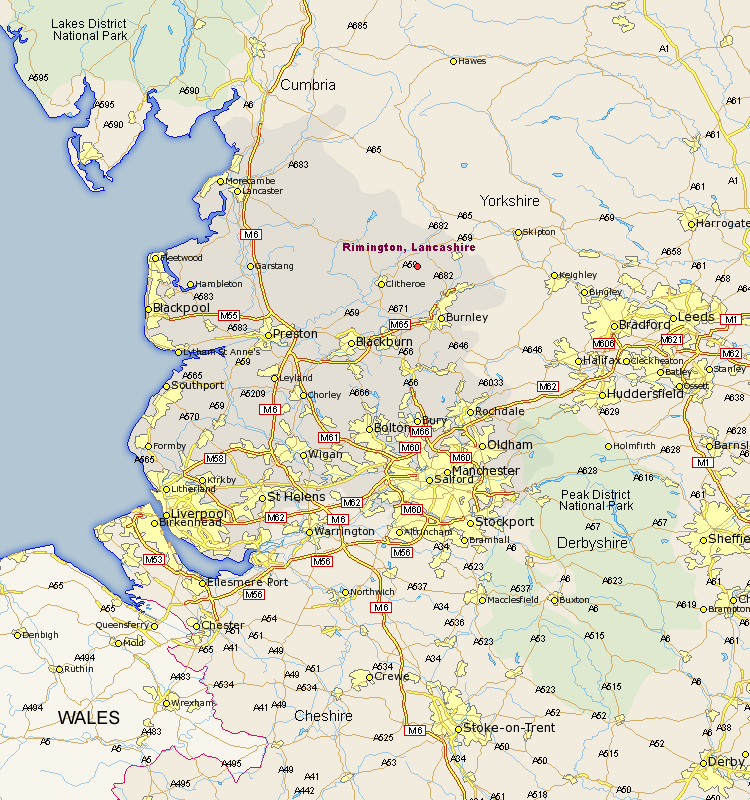
Robert Elwald 10 the beginnings of Redheugh;

Arthur Eliott father to the present clan chief is a genealogical family historian, of high regard, the best in his day, and the above on Robert Elwald 10, I can not began to improve on.
Mark Elliott 4/16/2015
Arthur Eliott and mom showing properly the two origins of the name Elliott;

Has been an excellent standard in the origins of the Elliot name variants for decades.
Arthur Eliott ahead of his time in 1986, showing that the only serious contention remaining in the origin of the Liddesdale Elliot, is that of the fairly common old Northumbrian christain name of Elwold or Elwald, but at the time lacking evidence, to make such a conclusion.

Mark Elliott 4/17/2015
Using Minimums;
No body has done a better research on the Daniel Elliot Cluster; U106 Y-DNA linked to Daniel Elliot which left testimony in The Salem Witch Trials, then Robert P. Elliott of which our Y-DNA are apart of.
Information supplied;


As one can see in the above data Germany is the minimum, though there is a group seemly note taking the minimum an leading towards Frisia.
One answer to this has been;
The Frisian Myth Of R U106
https://r1bu106.wordpress.com/the-frisian-myth-of-r-u106/
It is felt that a great number of those carrying U106 may have migrated through Frisia on the way to the British Islands.
Next excellent set of data provided by Robert P. Elliott and felt to be in high demand by analysis of Y-DNA of the Daniel Elliot cluster is;

Can not under estimate the outstanding research done by RP Elliott;
On Elliott origins;

An excellent write up from the Norman Breton English Welsh on to Scotland perspective, by Keith Elliot Hunter;
THE-ELLIOTS-BRETONSENGLISHWELSH-AND-SCOTS-KEH
Also this excellent information on the Breton Eliot, can be found at;
http://www.scotclans.com/scottish-clans/clan-elliot/elliot-history/
It should be noted;
Search engine bias by adding a 2 to elliot;

Try;
www.electricscotland.com/webclans/dtog/elliot.html
www.electricscotland.com/webclans/dtog/elliot2.html
and see for yourself.
QuintusPentillus of Clan Eliott Wikipedia linking to;
www.electricscotland.com/webclans/dtog/elliot2.html
Can anyone figure out who QuintusPentillus is?
MSE 1/14/2016
And;

Try links;
Of above;
http://www.landsbeyondthewall.co.uk/Elliot.html
Link provided by above;
http://www.scotclans.com/clans/elliot.htm
Now link from scotclans.com giving today’s modified history;
http://www.scotclans.com/scottish-clans/clan-elliot/elliot-history/
MSE 4/15/2016
Below gives numbers and shows even today commonality in name usage among the Elliot, Elliott, Armstrong and Fairbairn. For Elliot name of Elwald-Ellot, Scandinavian origins, the only female name is Margaret, the one the Clan Elliot chief, Margaret Eliott has.
The UK Elliott is of Wm de Aliot/Eliot, Norman southern France migration north into the St German/Port Eliot region, the Briton/Breton Eliot which Kieth Elliot Hunter as an excellent historian has been able to establish.

The US Elliott, likely since the United States has established their independence from England longer than New Zealand, Canada, and Australia, they had a longer length of time to add an extra “t” to their Elliot name of Scottish origins. The first Puritan Elliot of the Parliamentarians which established Harvard spelled their name as John Eliot did from southeast England but readily added extra “l” and or an extra “t” to the name.
The US Elliott are of the Anglo-Danish origins of Elwald-Ellot, which is establish by the first Robert Elwald of Norfolk, East Anglia, in the thirteenth century.
As presented quite well by they father of the Clan Chief which established The Clan Elliot Society, that the Elliott name has dual origins, the one which Keith Elliot Hunter has established, and the one which the Armstrong-Fairbairn (bear) and the Elwald (elk/moose) have as James Lewis Armstrong MD editor of The Chronicles of The Armstrong as a collective of the research of many Armstrong-Fairbairn, which is still going on today have been able to establish, along with the documentary expertise of Robert Bruce Armstrong in his history of Liddesdale and the border region; which has been able to extract an present documents as close to anyone in there original format, without judging content.
Map shows the Norman (Britan/Breton) Eliot, and the Anglo-Danish Elwald-Ellot entry into the British Isles;

It should be noted there is a Briton/Breton element of the Elliott name which most the English Elliott are from, which Keith Elliot Hunter has done a lot of research and is the foremost historian on the subject. A concept I learned from him is that Normany is Norwegian, and it helped me established the migration of the pre-surname Ker line, though it is felt that the surname may have been first establish in the swamp area were elk (moose) would like it, maybe be a John Ker, Hunter of Swinhope swin(e) wild boar, hope (valley) in the valley of the wild boar south of York.
Give the migration paths of the Elwald and Ker, and the migration of U106 DNA and the migration paths of the Dane it leads me to believe that the U106 is the DNA of the Danes.
With Gresham, Norfolf , N&S Cave, East Riding Yorkshire, and North Riding, matching my U106 exactly at 12 markers, plus Aliot of south France distribution and Eliot of North France distribution, shows me that the name Eliot is of Wm de Aliot southern France and influenced ca1650 in accordance to Arthur Eliott of the “i” being inserted into the Scottish name Ellot and retention of this name still exists in the border lands and is the density the strongest is the parish of Castleton, where the town of Hawick has a strong showing of these Elliot also.
Addition research done by RP Elliott;
It is quite common for U106 research to state Frisia, but if one runs the numbers an lets the computer do the calculation, the correction of interpretation is up to the analysed. As an applied mathematician/scientist, in my research when it calls for the minimum, though outside information may incorporate a bias, the minimum must be taken.

Dixon son of Dick (Richard).
Dixon, Dickson, and Nixon son of Nick (Nicolas).
From Forebears;


Seems old Northumbria included in above.
Burns
Though felt like in Robert Burns the name came from a geographic topographic feature and stream burn, but corrected by the Armstrong.
Eliot
The name Eliot above is represented of all common measurable variants of Eliot which in greater numbers would be Elliot, and much greater in number Elliott. Eliot has and origin of Wm de Aliot of southern France and Elliot has and Elwald-Ellot origin of Germanic Anglo Danish, and in the England the name Elliott would be of the Eliot St German English origin, and the Plantations of England Elliott would have an Scottish border Elliot origin.
Kerr
Also as Robert Elwald of Rimington, Lancashire, migrated up from Lancashire to the Borders.
Want to know where the Elchwald came from ask an Elch/Elk(moose).
It is said that the Ker/Kerr are about one third left-handed. So here are migration patterns of the Elwald and Kerr on a left-handed map;


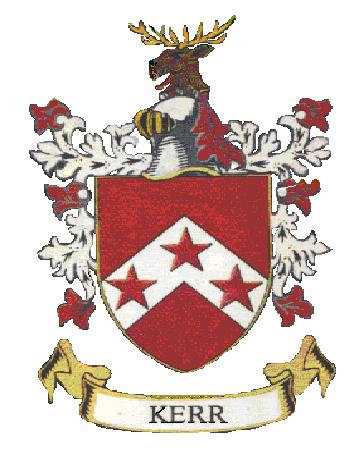
The crest below has an European elk (moose) on it, an animal of the marshlands, and on the east coast of today’s England previous to draining the marshes there were a lot of mash land.
When the Angles and Saxons invaded Britain from their continental homes, they were familiar with both Alces alces (the ‘elk’ of European English and the ‘moose’ of North American English) and Cervus elaphus (the ‘red deer’ of European English and the ‘elk’ of North American English) and applied those designations to members of the same two species which were also present in Great Britain. By about AD 900 Alces alces was extinct in Great Britain [but the word was still used because the English were familiar with the animal in continental Europe].
“Mallory, J. P., and D. Q. Adams. 2006 [forthcoming]. The Oxford Introduction to Proto-Indo-European and The Proto-Indo-European World. Oxford: Oxford University Press.”
http://languagehat.com/mooseelk/
Map shows early marsh/swamp land;

It is felt that the Ker/Kir which became Kerr surname is likely a seed of John Ker, Hunter of Swinhope (valley of the wild boar). Where Swinhope is and area of swampland, and Ker is felt to have it’s origins in Norway or meaning people of the swampland, an this would be an ideal environment for elk (moose), because they like swampland.


U106 Y-DNA distribution map showing Elwald/Ellot and Ker/Kerr migration patterns with the above may indicate that;
R-106 is the Y-DNA of the Danes;

Relations of Scot, Ker, Armstrong and Elwald/Ellot;

Ker, Scot air symbol. They all use a mullet star, the Scot and Armstrong use the crescent moon. Redheugh, and the Scot use a band, and the Kerr and Elwald/Ellot pre-Redheugh shield use a chevron.
Kerr surname distribution;


Ker migration by name. From Kerr Hall south of the border to Kerhopefoot, up Kerhope on the border, and Kerheugh north of the border.

King Elgwalt;
Chronicles of the Armstrong, James Lewis Armstrong MD editor;


The name on shield Elgwalt is of a Anglo-Danish-German king.
Elk (moose) and Robert P. know the family came from Poland to Germany.

Robert had found someone from Poland with the surname Elgiet, where elg means;

elk (moose), and the Kerr and the elk (moose) seem to know;

They will swim a river from Poland to go to the extent of their region into German around Berlin. So it is felt that the elk (moose) know that they come from Poland to go to German, and the Elchwald (elk of the forest) likely migrated with these good eating moose, like some natives of the Americas on the plains would migrate with their food stock the buffalo. Buffalo and elk (moose) can be chased down by man as supply a lot of good food stock, and easier to kill than an American elk (big deer).
This may have trained the Elchwald for chasing down kye (cattle) on the Borders.
Mark Elliott 4/19/2015
If one does not believe in the Fairy Bear and is a tree huger, the Linde tree lives a long time, and is found in Germany and the United Kingdom, unlike the elk/moose.
The Lindermann name is close to the Daniel Cluster in Y-DNA U106.

Surname distribution for Ewald and Lindemann are similar;


There is even a Lindenwald forest in the region;

This seems to be close to the area where U106 is mapped from and where the Polish elk (moose) are going to.

They seem to live many years and one is named a Forester Linde, where Forstar-Forest-Forester is a border surname.
Wið færstice is an Old English medical text surviving in the collection known now as Lacnunga.(10th, or 11th Century)
“Stod under linde, under leohtum scylde”,
The word “linde” for the tree has been around a long time.

With Norse language usage.
The linde tree still today is found on the migratory pathways of the first Robert Elwald;

Mark Elliott 4/27/2015
Alan
Allen/Alan of U106 DNA
1125 Aldano filio Alfwald (Alan son of Elfwald)
1248 Alanus Elfwoldus (Alan Elfwald)


1305 Alan Elfwald/Elwald father to Robert Elwald of Rimington.

1376 Alani-Alan surname in Liddesdale

Mark Elliott 4/28/2015
Dad, asked Germany? Son, said yes. 8-25-2013;
Dad, asked Germany, Son, said yes. 8-25-2013

1. Alan Elfwald of Norfolk, E Anglia ca 1250.
2
