Alan Alani Allen Surname Migration


Chronicles of the Armstrongs; : Armstrong, James Lewis MD :The Marion press 1902 : Internet Archive


(feel incorrect son Mark Stephen) He married Mary LAMBERT. The LAMBERTS were fishermen and mariners. The First Church of Salem in Nov 1681 listed Mary and the following three children;
Difficult to Transcribe plus Confusion and a Result with Clarification
2. i. Elizabeth Elliot b. ca 1660 d.
3. ii. Mary Elliot b. ca 1660 d.
4. iii. Daniel Elliot b. ca 1661 d. aft 1728
Difficult-to-Transcribe-plus-Confusion-and-a-Result-with-Clarification
The Armstrong and Elliott clans possessed a force capable of halting the army of the English kingdom. Around 1610, the extermination—effectively a genocide—of the native Armstrong clan began; to escape, they fled alongside the Elliotts to the lands of the Maguire clan in Fermanagh (with whom they had intermarried) and fought together against Cromwell. Subsequently, they were sent to English colonies under conditions bordering on slavery. And 250 years ago, my ancestors drove the Tories—supporters of the British Crown who held the Irish borderlands—out of America. Mark Stephen Elliott son of Loren Spencer Elliott family historians 10/9/2026
Кланы Армстронг и Эллиотт обладали достаточной силой, чтобы остановить армию Английского королевства. Примерно в 1610 году началось истребление — по сути, геноцид — коренного клана Армстронг; спасаясь от неминуемой гибели, они вместе с Эллиоттами нашли убежище на землях клана Магуайр в графстве Фермана (с которым их связывали родственные узы, возникшие благодаря бракам) и плечом к плечу сражались против Кромвеля. Впоследствии их отправили в английские колонии — уже не как ольстерских шотландцев, а как шотландцев-ирландцев — в условиях, граничащих с рабством. А 250 лет назад мои предки изгоняли тори — сторонников британской короны, которые до сих пор удерживают ирландские приграничные земли. Марк Стивен Эллиотт, сын Лорена Спенсера Эллиотта; историки семьи Эллиотт. 10/9/2026


Musical instruments. Pt. I. The Irish and Highland harps : Armstrong, Robert Bruce : pub , 1883 : Internet Archive

Chronicles of the Armstrongs; : Armstrong, James Lewis MD : 1902 Marion Press, NY: Internet Archive


Using Geographic Surname Correlation Extra MSE 1/19/2013 PDF
Chasing my Y-DNA part-35 MSE 1/16/2013 PDF
Armystrand & Elwald 3/11/2015 MSE PDF


FamilyTreeDNA.com/Social-Photos/3935440


Analysis of surnames: Maguire (from the Maguire clan, County Fermanagh); Johnstone (from a place name in Scotland) and Johnston (Ulster)—in America, these often merged with the English surname Johnson; Armstrong (derived from *amry-strand*—a locality on the border between the kingdoms of England and Scotland; spelling variants: Armystrand, Armestrand, Armstrong); MacManus (a Dublin Catholic form, literally “son of hands”) and McManus (an Anglican form, County Fermanagh); Elliott (the variant *Ellott* appeared in Liddesdale in 1590 and in the muster rolls of the O’Neill clan at Tullyhogue Fort in 1610; the surname is also linked to the O’Hagan family of counties Tyrone and Fermanagh). The letter “i” (reflecting Anglo-Norman influence) appeared in the spelling only around 1650; prior to that, in 1630, the surname was spelled *Ellot*.
Mark Stephen Elliott, family history researcher.
Анализ фамилий: Maguire (из рода Магуайр, графство Фермана); Johnstone (от названия местности в Шотландии) и Johnston (Ольстер) — в Америке часто сливались с английской фамилией Johnson; Armstrong (происходит от *amry-strand* — местности на границе королевств Англии и Шотландии; варианты написания: Armystrand, Armestrand, Armstrong); MacManus (дублинская католическая форма, буквально «сын рук» / *son of hands*) и McManus (англиканская форма, графство Фермана); Elliott (вариант Ellott встречался в Лиддесдейле в 1590 году и в списках ополчения клана О’Нил в форте Таллихог в 1610 году; фамилия также связана с родом О’Хаган из графств Тирон и Фермана). Буква «i» (франко-нормандское влияние) появилась в написании лишь около 1650 года; до этого, в 1630 году, фамилия писалась как Ellot.
Марк Стивен Эллиотт, исследователь семейной истории.




Armstrong Elwald, Mark Elliott 3/11/2015 PDF
Aliot-Elwald, Mark Elliott 7/15/2013 PDF
Lands of Horseliehill and Stobs, Relations of William of Horsliehill, Gavin of Stobs MSE 2013 PDF
Clan Crozier 1-6 Clan Crozier 7-13 MSE PDF
A1 Clade Report PDF

Gorrenberry Jubilee Wood
Background
Gorrenberry is an ecological restoration project which aims to restore much of the biodiversity of a substantial area in the Scottish Southern Uplands, while maintaining a varied pattern of economic activity at a sustainable level.
In 2011 Gorrenberry was a 935 hectare hill farm including four dwellings and two groups of steadings on the Hermitage Water, Roxburghshire, Scottish Borders (55.266827N, 2.845836W). It was purchased in March 2011 by Jane Bower and Ken Lyall. The farm is approximately 20 miles south of Hawick and is reached by the unclassified road between the A7 and the B6399 signposted to Hermitage Castle.


<


a href=”https://gorrenberry.com/wp-content/uploads/2022/01/Brigham-DNA-Gorrenberry-Wikipedia-9-4-2026-Google-Wikipedia.jpg”>


Chronicles of the Armstrongs; : Armstrong, James Lewis MD : Internet Archive.org

Chronicles of the Armstrongs; : Armstrong, James Lewis MD : Internet Archive.org

Chronicles of the Armstrongs; : Armstrong, James Lewis MD : Internet Archive.org


 https://www.bing.com/search?q=barbados+scots


Bing Videos-Die irischen Zuckersklaven von Barbados

Genealogy Garage: Scottish Prisoners of War youtube

Involuntary Americans: Scottish Prisoners in 17th Century Maine youtube


Though most of this work by writer is felt on it’s basis that the name Alan came from the Alan people is incorrect, does not mean that the Alan people had not influence my DNA. This writing is a stab at thing to see what may show. MSE 4/1/2015
Could be previous to the making of Alan Elfwald, give a son name Alan of a father named Elfwald, like it is fairly standard among Scandinavians to take the father’s name as a surname the name then becomes Alan Elfwald;

Though there may be some Norman influence on the name becoming Allen from the people of Scandinavia Alan in England. It is felt the name in Scotland originated as Alan in England and stayed Alan in Scotland, though there likely was another introduction of the name Allen in England which the English Alan adopted, this is felt what happened to Ellot it accepted the English Elliot name.


The name Alanus Elfwold existed, in 1248 Bec, Northfolk, East Anglia, a combination of two personal names Alan and Elfwald, where Alan is also used as a surname.

The name Alan migrates to Scotland, but in England Alan becomes the name Alan.
Alan is the father of a Robert Elwald of Rimington, Lancashire ca 1305.

Alani/Alan is found as a surname in Liddesdale in 1376;

It is felt that the Alan family in the very north was part of border displacement during The Union of the Crowns ca 1610.

Hope this may help the Alan/Allen families.
M Elliott 2/20/2015
Alan (Alani)/Alanus of Alanus Elfwald is felt to be an old personal name in which Alan the son of Elfwald became Alan Elfwald.

Alan Elfwald is found in Bec, Norfolk, East Anglia in 1248, and Robert Elwald of Rimington, Lancashire is found to be the son of Alan, he has a pledge of the Anglo town of Jarrow.

In 1376 the name Alani is used as a surname in the Liddesdale region.

In Scandinavian naming convention the surname is mainly taken from the personal name of the father, and at the time this Elfwald/Elwald line started it seem that Alan/Alani was and important family name.
It is felt that some people, like Christian, Scot, Elwald, Fairbairn, and Alani may have their names of given groups. Know someone named Willard Zuni, which is Zuni, of a indigenous American Nation sometimes referred to as tribe with it’s own language, the surname Alan/Alani, could have came from a people of Alan/Alani, with their own language, much in the same way Willard Zuni obtained his name.
It is felt that the pre-evolved name of the Scandinavian, Ellot/Elliot is Elwald, and in Germany the “l” was likely dropped giving an European surname distribution of;

One can compare it with Alan distribution;

and a migration map of the Alan;

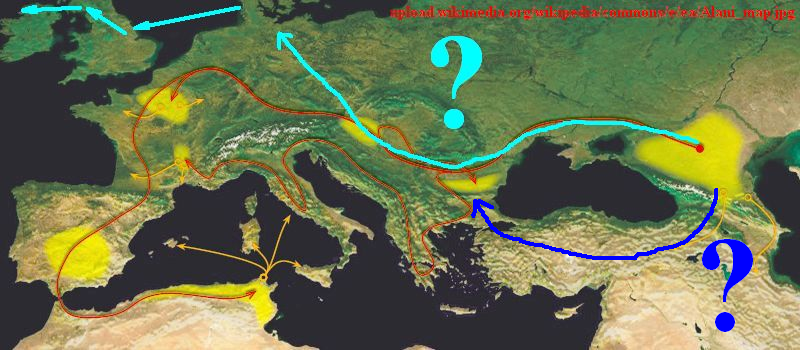
along with my U106 Y-DNA;


As one can see that the Dan Ellot/Elwald U106, share U106 with the Allen family.
Alan/Alani question; are some M269 Y-DNA?
There is not enough information in which I can make the above conclusion, but may be others can utilize information about added to their own to make a more qualified conclusion.
plus the history;

Alan migration seem to travel north of the Black Sea, where M269 Y-DNA which produces U106 seems to travel south of the Black Sea.
MSE 3/5/2015
?; is there a link between the Anglos and Alans?
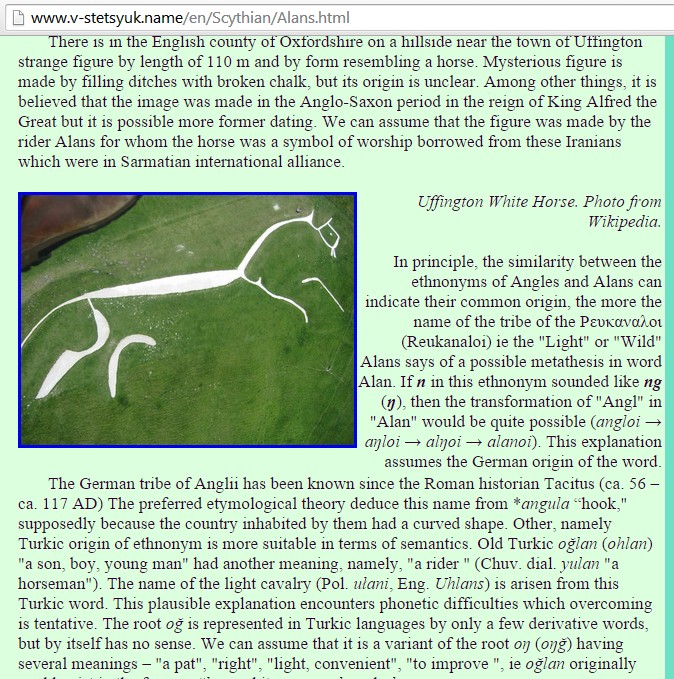

The Sceat of King/Saint Ælfwald of Northumbria, one side is the Danish-Celtic oriented stag’s head the other side a Alans’ horse.

Minted in York near end of near end of eighth century.
An Ælfwald is also of East Anglia where the Latin from of the name Alan Elfwald; Alanus Elfwaldus, Bec, Norfolk, East Anglia 1248.
The stag’s head is spiritual to the Anglo, and the horse is spiritual to the Alans, thus maybe the name comes from in Scandinavian naming convention as Alan the son of Elfwald becomes previous to 1248; Alan Elfwald.
Basis of knowledge of the Alans culture now is quite low, and the further which is extrapolated back in time by me into European cultures the greater the errors.
The above is a rough theoretical extrapolation, it would be an honor if one of a greater knowledge basis, could utilize even one concept brought forth. Do not at this time claim any correctness in above, but would be honored if others with cross referencing an a knowledge base can claim correctness in the above research.
Mark S. Elliott 3/5/2015
Matching maps makes me wonder;
U106 M S Elliott matching maps;


Other info;

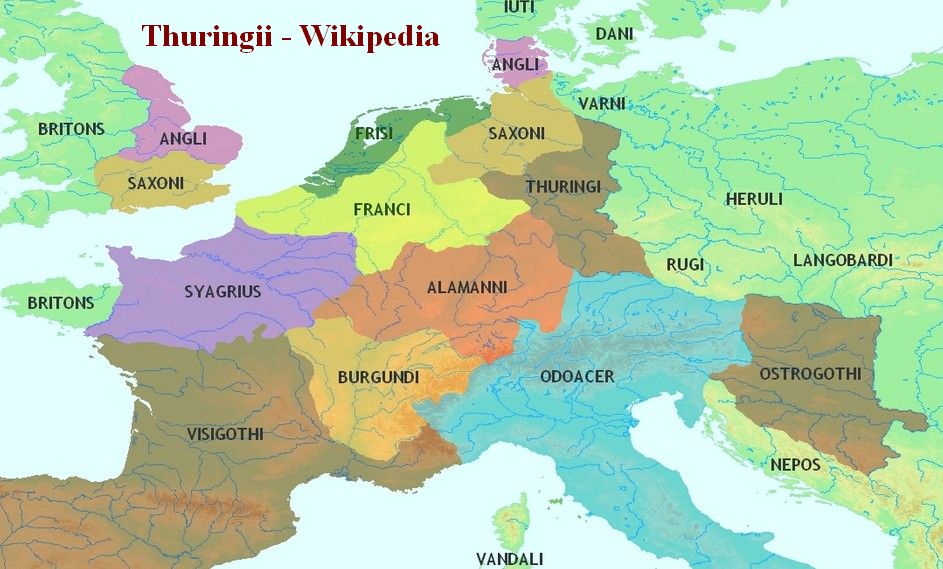

MSE 3/5/2015
